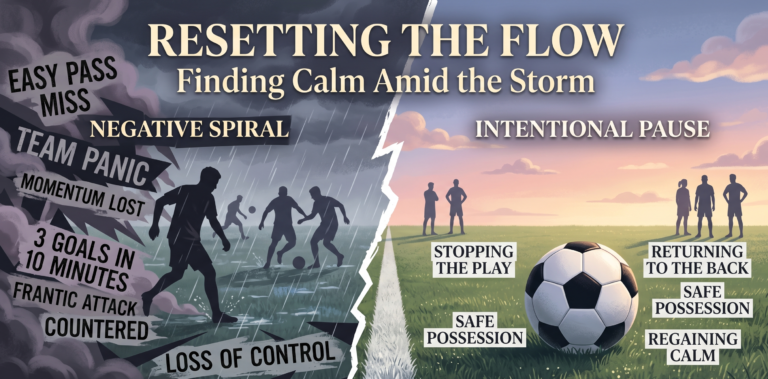
There is a rhythm to life; sometimes it flows beautifully, and sometimes it turns against you. I have come to realize that a single, seemingly insignificant moment can completely derail a situation. A tiny lapse in focus, a fleeting moment of carelessness—and a minor mistake triggers a domino effect, pulling everything into a downward spiral.
An individual’s motivation, a team’s morale, or even the bond between a married couple. This “danger zone” can strike anywhere, showing no mercy. Mistakes are bound to happen; we are only human, after all. What truly matters is how we recover when we find ourselves in that spiral, and how we shift our mindset.
Lately, I found myself reflecting deeply on the terror of this negative chain reaction and the tactics needed to break it.
Case 1: Panic in Sports (Soccer)
The first thing that comes to my mind is the heavy, suffocating atmosphere on the pitch—that distinct feeling of being dragged into a quagmire.
- 【The Warning Sign: A Single Missed Pass】 During a match, a single, easy pass goes astray. It seems minor, but it can completely break the team’s gears. From that one moment of slackness, panic spreads across the entire team, and the focus we maintained so well vanishes into thin air. The opponent never misses such a vulnerability. Caught in their fierce onslaught and paralyzed by anxiety, we concede three goals in a frantic ten-minute blur. Desperate to win the goals back, we rush forward blindly, only to fall prey to their counterattacks and deepen our own wounds.
When trapped in this spiral, I often recall the composure of veteran players I once watched. Experienced players never rush into a low-probability, long-range pass to turn things around in one breath. Instead, they choose a much more grounded, reliable method.
- 【The Recovery Tactic: Stopping the Play and Securing the Ball】 The moment they sense a negative momentum, they deliberately kick the ball far out of bounds, forcing the play to a complete stop. To catch their breath, they completely lock away any risky forward passes. Instead, they circulate short, secure passes in their own half—passes that anyone can complete without fail—gradually restoring calm to the entire team. By committing to an “intentional pause” and “safe possession,” they weather the opponent’s fury and slowly claw the control of the match back into their own hands.
It doesn’t have to look glamorous. Stopping the momentum comes first. This ironclad rule of sports was exactly what I needed in my own daily desk work.
Case 2: Wasted Time at the Desk
- 【The Warning Sign: The Morning Trap of “Just a Few Minutes”】 First thing in the morning, the moment I sit at my desk, I open my smartphone thinking, “just for a few minutes.” That casual action becomes a fatal error that disrupts the entire rhythm of my day. Consequently, the heavy, high-priority tasks I am supposed to tackle get pushed back. The anxiety growing in my mind leads to a chain of secondary mistakes, like overlooking an important email reply. Ultimately, my brain gives up on the day, deciding that nothing will go right anyway, and I find myself idling away the hours well into the afternoon.
This is the exact equivalent of conceding three goals in ten minutes. In my rush to make up for lost time, I only end up widening my own wounds. That is why, when this happens, I choose to “kick the ball out of bounds.”
- 【The Recovery Tactic: A Five-Minute Pause and Short Passes】 When I notice my focus shattering and tasks falling behind, I put down my phone and step away from my desk for just five minutes, forcing the negative flow to stop. I give up trying to reverse the delay with one giant leap and switch instead to microscopic tasks—like writing just one line of a document or replying to a single email. By intentionally lowering the difficulty level of the game, I soothe my panicked brain and steadily regain control over my pace.
I stop aiming for risky vertical passes and focus on circulating reliable short passes in my own half. Even if I am flying at ultra-low altitude, as long as I hold the controls, I can always rebuild the game from here.
Case 3: The Emotional Cold War in a Relationship
And perhaps, the place where this tactic is tested the most is at home—the most important place of all.
- 【The Warning Sign: A Half-Hearted Reply Triggering a Cold War】 Using fatigue as an excuse, I skip a word of gratitude to my partner or give a blunt, half-hearted response. That single moment of carelessness instantly freezes the atmosphere in the room. Faced with their cold demeanor, I react with defensive anger, completely collapsing our defenses and plunging us into a muddy emotional battle. A single piece of careless communication acts as a trigger, dragging up past grievances and leading to a long, exhausting cold war that lasts for days.
A quagmire where both sides rush forward, striking each other with emotional counterattacks. Before suffering an irreversible defeat, the move to make is already decided.
- 【The Recovery Tactic: A Reset Free of Pride and the Ultimate Defense】 The moment I sense that my own sharp words have ruined the air, I stop the conversation entirely before adding any more thorns. Acknowledging that we have entered a bad flow, I drop my stubborn pride and immediately say, “My tone was bad, I’m sorry,” firmly tightening our defense. Resetting the game myself before the emotional counterattacks begin is the ultimate strategy to prevent an unproductive, long-term conflict.
Abandoning a reckless attack just to protect my pride and choosing to reset the game myself is not an admission of defeat. I believe it is the bravest and best form of defense to protect the game that is our relationship.
Mistakes will always happen. We are human, and we all have our ups and downs. What matters is how quickly and cleanly we can choose to “pause” the moment we realize we are being swallowed by a negative current.
There is no need to force ourselves to look forward in a panic. First, put down the phone and stand up. Pull back the thorns and say, “I’m sorry.”
Taking a deep breath and finding the courage to kick the ball out of bounds to my own touchline—this is a practice I want to carry with me always.
タイトル:悪い流れを断ち切る、私なりの「タッチライン」
いい流れもあれば、悪い流れもある。 何かのきっかけで一気に状況が悪くなる瞬間というのは、確かに存在する。ちょっとした集中力の低下、ほんの一瞬の気の緩み。そこから生じた小さなミスが引き金となり、まるでドミノ倒しのようにすべてが悪い方向へと転がっていく。
個人のやる気、チームの士気、あるいは夫婦の絆。 あらゆる場面でこの「魔の時間」は牙をむく。ミスは必ず起きるのだ。だからこそ大事なのは、そうなったときにどう挽回するか、どうやって切り替えるか。
日々のなかで、私はそんな「悪い流れ」の連鎖の恐ろしさと、それを断ち切るための戦術について深く考えていた。
事例1:スポーツ(サッカー)におけるパニック
まず頭に浮かぶのは、スポーツにおけるあの独特な空気の重さ、泥沼に引きずり込まれるような感覚だ。
- 【崩れる予兆:たった一度のパスミスから】 試合中のたった一度の、なんてことのないイージーなパスミス。それがすべての歯車を狂わせることがある。その一瞬の緩みからチーム全体がパニックに陥り、それまで保っていた集中力が嘘のように途切れてしまうのだ。 相手はその隙を絶対に見逃さない。猛攻を受け、焦っている間に、あれよあれよという間に10分間で3点も入れられるような最悪のシナリオが現実になる。取り返そうと焦って前がかりになり、無理に攻め急ぐほど、皮肉にも相手のカウンターの餌食になってさらに傷口を広げていく。
この展開に陥ったとき、かつて観た見事な試合の光景が頭をよぎる。百戦錬磨のプレイヤーは、決して一発逆転のロングパスを強引に放り込んだりしない。彼らが取るのは、もっと泥臭く、確実な方法だ。
- 【立て直しの戦術:あえてゲームを止め、足元を固める】 悪い流れを察知した瞬間に、彼らはあえてボールをタッチラインの外へ大きく蹴り出し、プレーを強制的にストップさせる。まずは息を吹き返すために、リスクのある前線へのパスを完全に封印するのだ。 自陣の後方で、誰もが確実に通せる短いショートパスを何度も回し、チーム全体に落ち着きを取り戻していく。「意図的な中断」と「安全なプレイ」に徹することで、敵の激しい猛攻をやり過ごし、試合の主導権を少しずつ自分たちの手へと引き寄せる。
不格好でもいいから、まずは流れを止める。このスポーツの鉄則は、私の日々のデスクワークにこそ必要不可欠なものだった。
事例2:デスクワークにおける時間の浪費
- 【崩れる予兆:朝一番の「ちょっとだけ」という罠】 朝一番、デスクに向かった瞬間に「ちょっとだけ」とスマホを開いてしまう。その何気ない行動が、1日のリズムを狂わせる致命的なミスになる。 これにより本来やるべき重いタスクが後ろ倒しになり、心に生まれた焦りから、メールの返信漏れといった二次災害的なミスを次々と連鎖させてしまう。最終的には「もう今日はまともに進まない」と脳が試合を投げ出してしまい、午後までずるずると時間を浪費していく。
まさに、10分間で3点取られるパニック状態そのものだ。遅れを取り戻そうと焦るあまり、自分で自分の傷口を広げていく。だからこそ、私はここで「タッチラインの外へボールを蹴り出す」ことにしている。
- 【立て直しの戦術:5分間の離席と、極小のショートパス】 集中力が切れてタスクが遅れ始めたと気づいたら、まずはスマホを置いて5分間だけ席を離れ、強制的に流れを切る。一発逆転で遅れを取り戻そうと焦るのをやめ、「資料を1行だけ書く」「メールを1通返す」という、拍子抜けするほど極小のタスクに切り替えるのだ。 ゲームの難易度を意図的に下げることで脳のパニックを鎮め、自分のペースで仕事のコントロール権を取り戻していく。
リスクのある縦パスを狙うのをやめ、自陣で確実なショートパスを回す。超低空飛行でも、コントロール権さえ戻れば、またここから組み立て直せる。
事例3:夫婦関係における感情の冷戦
そしてこの戦術が、何より試されるのは家庭という一番大切な場所かもしれない。
- 【崩れる予兆:無愛想な生返事が招く冷戦】 疲労を理由に、パートナーへの感謝を省略したり、無愛想な生返事をしたりする一瞬の緩み。それが家庭内の空気を一瞬で凍りつかせる。 冷たくなった相手の態度にこちらも逆ギレしてしまうと、お互いのディフェンスが完全に崩壊し、泥沼の感情戦へ突入していく。たった一つの雑なコミュニケーションが引き金となり、過去の不満まで連鎖して、数日間に及ぶ長い冷戦を招いてしまう。
お互いに前がかりになり、感情のカウンターをぶつけ合う泥沼。取り返しのつかない大敗を喫する前に、やるべきことは決まっている。
- 【立て直しの戦術:意地を捨てたリセットと、最善の守備】 自分の雑な一言で空気が悪くなったと察知したら、それ以上トゲのある言葉を重ねる前に会話を一度ストップさせる。「今、悪い流れに入っている」と自覚して意地を張るのをやめ、すぐに「言い方が悪かった、ごめん」と伝えて守備を固めるのだ。 感情のカウンターの応酬が始まる前に、自ら進んでゲームをリセットすること。それこそが、不毛な長期戦を防ぐ最善の戦術になる。
プライドを守るための無理な攻めを捨て、自らゲームをリセットする。それは負けを認めることではなく、二人の関係というゲームを守るための、最も勇敢で最善の守備なのだと思う。
ミスは必ず起きる。人間だから、波だってある。 大切なのは、悪い流れに呑まれていると気づいたその瞬間に、いかに早く、潔く「中断」できるかだ。
焦って無理に前を向く必要はない。 まずはスマホを置いて席を立つ。トゲを引っ込めて「ごめん」と言ってみる。
大きく息を吐き、自分だけのタッチラインの外へボールを蹴り出す勇気を、これからも忘れずにいたい。


コメント